ELVIS COSTELLO: NEW ALBUM 'SECRET, PROFANE & SUGARCANE'

Flash Required
cover

Secret, Profane & Sugarcane Available Now

Here's a page of two to invite you to our new adventure
No payment due
None is required
So step inside
Words and picture will accrue
In time
If you'll abide

Patience is not a crime
It's not so hard to practice
It's another operetta like "The Mikado"
If you are a actor or an actress

Pirates sink from view
So how do you do?
Spring has sprung
Songs will be sung
And tall tales are likely to be spun
Notebooks open from a distant age
Where lines first scrawled in Indian ink now kink across the page

Want something for nothing?
Think everything is free?
Don't ask me
How should I know?
Why should it be?
Why should it be so?
Why should I care?
I'm right here
And nowhere
Tied up in bow

So then for now
I will say it loud and plain
Welcome to the "Secret, Profane and Sugarcane"
And when the band begins to play
We hope you will be there
To find out where just travel through the Hills of Millionaire

Next

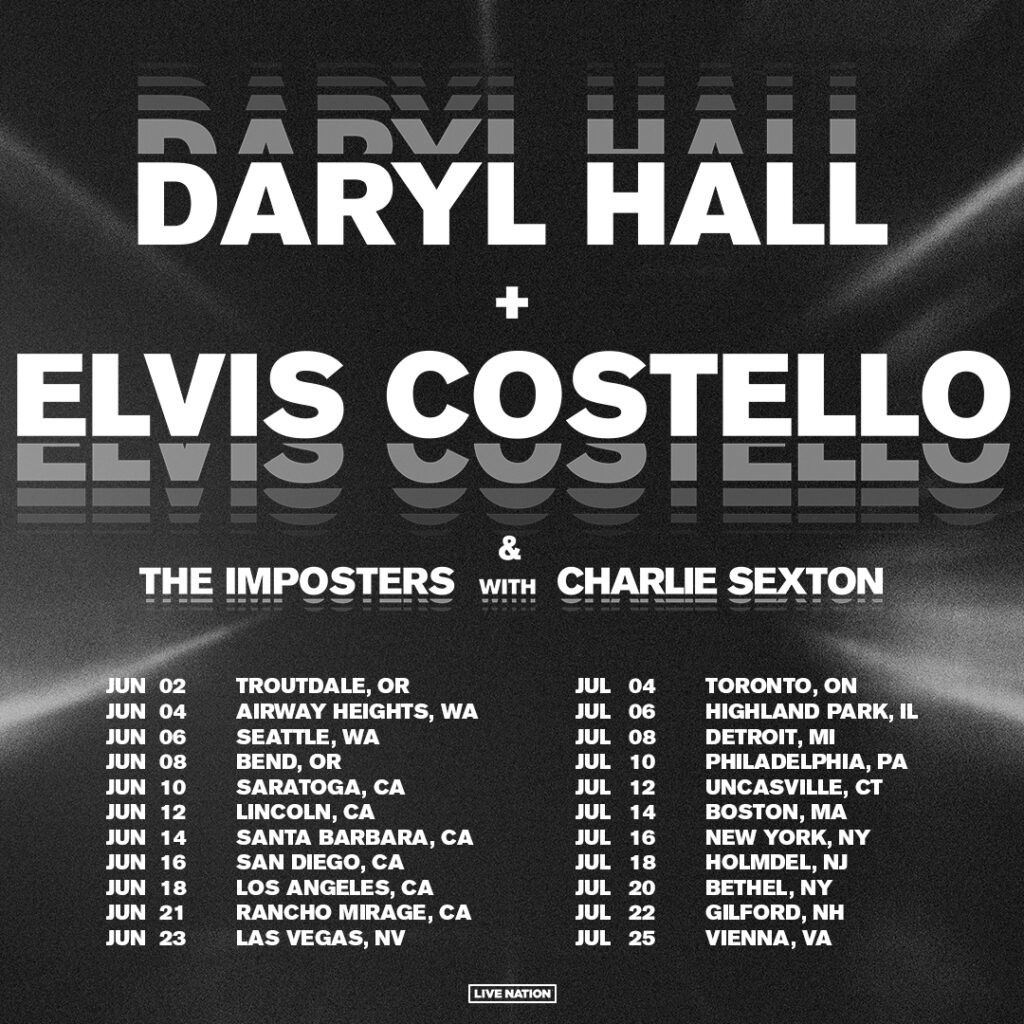
Tour Dates

Date City State Country Venue  
8 August 2009 Summer Sonic Festival Tokyo Japan Elvis Costello & The Imposters Buy Tickets
9 August 2009 Summer Sonic Festival Osaka Japan Elvis Costello & The Imposters Buy Tickets
15 August 2009 Salt Lake City Utah USA Dear Valley Music Festival
Elvis Costello & Steve Nieve with the Utah Symphony
Buy Tickets
17 August 2009 Saratoga California USA Mountain Winery
Elvis Costello & The Sugarcanes
Buy Tickets
18 August 2009 Los Angeles California USA Greek Theatre
Elvis Costello & The Sugarcanes
Buy Tickets
19 August 2009 Livermore California USA Wente Vineyards
Elvis Costello & The Sugarcanes
Buy Tickets
21 August 2009 Santa Rosa California USA Wells Fargo Center
Elvis Costello & The Sugarcanes
Buy Tickets
22 August 2009 Jacksonville Oregon USA Britt Pavilion
Elvis Costello & The Sugarcanes
Buy Tickets
23 August 2009 Seattle Washington USA Chateau St. Michelle
Elvis Costello & The Sugarcanes
Buy Tickets
24 August 2009 Vancouver British Columbia Canada Malkin Bowl
Elvis Costello & The Sugarcanes
Buy Tickets
26 August 2009 Highland Park Illinois USA Ravinia Festival
Elvis Costello & The Sugarcanes
Buy Tickets
27 August 2009 Kettering Ohio USA Fraze Pavillion
Elvis Costello & The Sugarcanes
Buy Tickets
28 August 2009 Toronto Ontario USA Massey Hall
Elvis Costello & The Sugarcanes
Buy Tickets
29 August 2009 Chatauqua New York USA Chautauqua Institute
Elvis Costello & The Sugarcanes
Buy Tickets
1 September 2009 Austin Texas USA Long Center
Elvis Costello & The Sugarcanes
Buy Tickets
2 September 2009 Dallas Texas USA Nokia Theatre
Elvis Costello & The Sugarcanes
Buy Tickets
3 September 2009 Tulsa Oklahoma USA Cains Ballroom
Elvis Costello & The Sugarcanes
Buy Tickets
5 September 2009 Snomass Colorado USA Jazz Aspen
Elvis Costello & The Imposters
Buy Tickets
8 October 2009 Freemantle - Australia Freemantle Arts Centre
Elvis Costello
Buy Tickets
10 October 2009 Melbourne - Australia Palais Theatre
Elvis Costello
Buy Tickets
11 October 2009 Hobart - Australia Wrest Point Entertainment Centre
Elvis Costello
Buy Tickets
14 October 2009 Canberra - Australia Royal Theatre
Elvis Costello
Buy Tickets
15 October 2009 Sydney - Australia Enmore Theatre
Elvis Costello
Buy Tickets
18 October 2009 Brisbane - Australia Convention Centre
Elvis Costello
Buy Tickets

News

New Album, “Secret, Profane & Sugarcane”

04 March 2009

ELVIS COSTELLO'S NEW ALBUM 'SECRET, PROFANE & SUGARCANE' OUT JUNE 2nd; PRODUCED BY T BONE BURNETT IN NASHVILLE

Elvis Costello's new album 'Secret, Profane & Sugarcane' will be released by Hear Music on June 2nd.

The record was produced by T Bone Burnett and recorded by Mike Piersante during a three-day session at Nashville's Sound Emporium Studio.

Joining Costello were Jerry Douglas (dobro), Stuart Duncan (fiddle), Mike Compton (mandolin), Jeff Taylor (accordion) and Dennis Crouch (double bass), some of the most highly regarded recording artists and musicians in traditional American country music, Bluegrass and beyond.

Several of these songs, including "Down Among The Wines and Spirits", were given their first public performances during Costello's acclaimed solo appearances as part of "The Bob Dylan Show" in late 2007.

The album includes ten previously unrecorded songs. "Sulphur to Sugarcane" and "The Crooked Line", were co-written with T Bone Burnett while, "I Felt The Chill" marks Costello's second recorded songwriting collaboration with Loretta Lynn.

Costello revisits two songs from his catalogue in string band style. Both songs were originally written for Johnny Cash. "Hidden Shame" was indeed included on Cash's album, "Boom Chicka Boom".

The album title makes reference to "The Secret Songs", Costello's unfinished commission for the Royal Danish Opera about the life of Hans Christian Andersen.

Seeking a new connection from the author to the Anglophone world, Costello wrote about the Andersen's relationship with the world famous singer, Jenny Lind in "She Handed Me A Mirror" and "How Deep Is The Red".

"She Was No Good", relates some of the chaotic details of Lind's famous "All-American" concert tour of 1850, which was promoted by P.T. Barnum. In its aftermath, "Red Cotton" imagines Barnum reading an Abolishionist pamphlet, while manufacturing cheap souvenirs of the adventure.

These four episodes were newly adapted for the instrumentation of this record.

Indeed these are first Costello compositions to be predominantly rooted in acoustic music since his 1986 album, "King Of America", which was produced by T Bone Burnett. He also produced the 1989 album, "Spike".

T Bone adds his distinctive Kay electric guitar to several of numbers, the only amplified instrument on the recording.

Jim Lauderdale takes the close vocal harmony part throughout the record and Emmylou Harris contributed a third vocal part on the chorus of "The Crooked Line" on the final day of recording.  

The record concludes with the waltz, "Changing Partners", a song made famous by Bing Crosby.

The cover artwork of "Secret, Profane & Sugarcane" is an ink drawing by the renowned cartoonist, illustrator and author, Tony Millionaire.

Elvis Costello first recorded in Nashville with George Jones in 1979 and returned to the city for "Almost Blue", his 1981 album of classic country covers.

He returned to the city in 2004 to record a duet rendition of "The Scarlet Tide" with Emmylou Harris.

This song, co-written with T Bone Burnett, received an Academy Award nomination for Alison Krauss' rendition in the motion picture, "Cold Mountain" in 2003.

The 7" vinyl single, "Complicated Shadows" b/w "Dirty Rotten Shame" will be released on Independent Record Day, April 18th.

Select US tour dates featuring musicians from the album -- dubbed "The Sugarcanes" -- will follow in June and August, 2009.

"SECRET, PROFANE, & SUGARCANE" TRACK LIST

  1. Down Among the Wine and Spirits
  2. Complicated Shadows
  3. I Felt the Chill
  4. My All Time Doll
  5. Hidden Shame
  6. She Handed Me a Mirror
  7. I Dreamed of My Old Lover
  8. How Deep is the Red
  9. She Was No Good
  10. Sulphur to Sugarcane
  11. Red Cotton
  12. The Crooked Line
  13. Changing Partners

Due to the division of the music over four sides, the vinyl edition will contain two additional tracks, a arrangement of Lou Reed's "Femme Fatale" and Costello's sequel to the old Appalachian murder ballad, "Omie Wise", entitled, "What Lewis Did Last".

Beginning June 2, 'Secret, Profane & Sugarcane' will be available at participating Starbucks company-operated locations in the U.S. and Canada and wherever music is sold.

New Spring and Summer Tour Dates

04 March 2009

We've just added some more dates for 2009. Please check out the Tour Page for more information and ticket details.

Secret, Profane & Sugarcane is highest in 30 years

12 June 2009

#13 Bow for Secret, Profane & Sugarcane is Highest in 30 years for Elvis Costello. Elvis Costello's new album Secret, Profane & Sugarcane (Hear Music) has debuted at #13 on the Billboard 200, the musician's highest album chart position since 1980's Get Happy.

Reviews Of Elvis Costello's New Album

05 June 2009

Washington Post: June 2nd 2009: Bill Friskics-Warren.

Almost three decades have passed since Elvis Costello made his first foray into country music with 1981's "Almost Blue." An update of the soulful countrypolitan sound that producer Billy Sherrill created with George Jones and Charlie Rich, the record might have turned a generation of punks on to classic country, but it was marred by Costello's over-emoted vocals. By contrast, this T Bone Burnett-produced sequel opts for subtlety and understatement and, apart from a sluggish tempo or two, feels as effortless as its predecessor felt forced.

No small share of the credit goes to the backing musicians, a sterling cast of first-call session pros including Jerry Douglas on Dobro and Stuart Duncan on fiddle. On paper, the album's acoustic instrumentation suggests bluegrass, but as much as anything else, its shuffles and waltzes hark back to a post-World War II Nashville where distinctions between country and bluegrass had yet to exist.

Other than the set-closing cover of "Changing Partners," a hit for both Patti Page and Pee Wee King in 1954, Costello wrote or co-wrote every song, and just about all of them are graced by singer Jim Lauderdale's purling harmonies. Several tracks also feature accordion and mandolin in Cajun-style arrangements, including "The Crooked Line," which Emmylou Harris lifts with her numinous vocals. Even better, though, is "I Felt the Chill," a song written with Loretta Lynn that echoes the anguished story line of her similarly titled 1974 single, "When the Tingle Becomes a Chill."

North Bay Bohemian's Blog: June 1st 2009: David Sason.

This week's Secret, Profane and Sugarcane is the album that Elvis Costello was meant to make. The set is the culmination of all his roots/country-western excursions, from 1981's covers record Almost Blue to 2004's southern-fried collection The Delivery Man.

Going much further than 1986's Americana tribute King of America, Costello ditches the entire rock band setup, in favor of dobro, accordion, double bass and the fiddle. Now regulars at Hardly Strictly Bluegrass, Costello & his acoustic seem right at home in the down-home arrangements. Stuart Duncan's transcendent, weeping fiddle buoys each song, especially  "I Felt the Chill", co-written by Loretta Lynn, and the somber "She Handed Me a Mirror", one of four songs from Costello's oft-delayed chamber opera about Hans Christian Andersen.

Costello's wizened, gravelly voice makes with the group a perfect union, one he obviously didn't want to waste, judging from the inclusion of old songs "Complicated Shadows" (a vast improvement over the original) and "Hidden Shame", originally written for Johnny Cash.

While comprised mostly of torch songs, Costello sounds like he's having the most fun of his career on the record. Case in point is the playful, jug-band blues of "Sulphur to Sugarcane", which gained a new couplet each night on the Bob Dylan tour Costello opened for last year: "The women in Poughkeepsie, take their clothes off when they're tipsy."

Although from different sources, the songs make a uniform, satisfying set. Because of the expert "non-rock" musicianship and luscious vocal melodies (hear instant classic "The Crooked Line"), Costello's sometimes capricious muse gains newfound credibility, and we finally can understand the constraints of his traditional band (the Attractions/Imposters). Maybe it took him 30 years to get here, but the songwriter's roots tunes finally sound authentic instead of gimmicky. Secret, Profane and Sugarcane is a must-hear and confirmation that 21st-century Elvis Costello is best in a cowboy hat.

Kentucky.com: June 1st 2009: Walter Tunis.

 Secret, Profane and Sugarcane would seemingly represent another avenue. It's an acoustic, country/American recording produced by T Bone Burnett and cut with such esteemed string players as dobro ace - and onetime Lexingtonian - Jerry Douglas, mandolinist Mike Compton and fiddler Stuart Duncan. But the album is really more of a musical reiteration, and a pretty fine one, too.

The artistic ties to Burnett go back to the mid-'80s. But here, the producer simply lets Costello's inner country demons run loose, even though they really aren't that different from the rock, pop and even operatic upstarts that inhabit his music. "Each time I try to tell the ugly truth, you always let it pass you by," Costello sings with his usual sense of detached irony during Hidden Shame. "You said I'd never tell you a lie just because I could." 

The music roars along with a pronounced bluegrass swagger fortified by Douglas' wiry dobro accents, Dennis Crouch's doghouse-style bass and spot-on vocal harmonies by Jim Lauderdale. Musically, it sounds like Costello slipped back in time to sit in on a vintage string band session with Jimmy Martin. But the sentiments also have a dark, human core that links bluegrass to Costello's keener songwriting.

More playful is Sulphur to Sugarcane, a string-savvy slice of burlesque that outlines a gigolo's confessional of womanly encounters on the road. Supposedly, Costello added couplets to the song that referenced each city he played during a 2007 tour with Bob Dylan ("The women in Poughkeepsie take their clothes off when they're tipsy; in Albany, New York, they love the filthy way I talk"). Louisville was part of that tour but escapes mention in the songs. Probably just as well.

As usual, Costello is often as sobering as he is sly. Red Cotton is one of four songs offered in string-band form from an in-progress opera Costello is composing about Hans Christian Andersen. Some are achingly romantic (She Handed Me the Mirror, I Dreamed of My Old Lover).Red Cotton, though, leaps from Andersen to P.T. Barnum's views of an abolitionist America. Who else but Costello could discover a link like that? The back story doesn't matter here, though. The song's depiction of slavery, played over elegiac strings, stings all on its own ("White is the color on your fine linen bed, the blood stained red on each cotton thread").

Other, less weighty delights include The Crooked Line, one of two Costello tunes co-written by Burnett, with Emmylou Harris singing harmony; a redesigned Complicated Shadows, first cut with more rockish intent on 1996's All This Useless Beauty; and an album-closing update of Changing Partners, a 1954 hit for Bing Crosby.

Costello has made bolder Americana statements (2005's The River in Reverse, for example). But Secret, Profane and Sugarcane is a wondrous, dark and unendingly human scrapbook of songs. That it possesses an equally fascinating string band sound is a mammoth plus.

Salt Lake City Tribune: 1st June 2009: David Burger.

Now comes Elvis Costello's "Secret, Profane and Sugarcane," the musical experimenter's first mostly acoustic album since his classic treatise on America in 1986, "King of America." As with the music of U2, it is fascinating to see our land and icons from a foreigner's eye, and this eminently melodic bluegrass-and-folk album includes several songs from Costello's unfinished commissioned work on fairy-tale writer Hans Christian Andersen. These are wry, often whimsical and sometimes sad songs that rank among his most beautiful work.

The Independent: 29th May 2009: Andy Gill.

A shoddy set of barrel-scrapings overall, lacking both focus and impetus.

Los Angeles Times: June 1st 2009: Randy Lewis.

A song cycle of sorts incorporating themes that wind like the muddy Mississippi through the cultural legacy of the American South and the tragic secrets and varied stripes of love -- obsessive, unrequited and misfired.

Some songs can be as straightforward as classic country. Costello wrote with country queen Loretta Lynn "I Felt the Chill Before the Winter Came," a dark scenario of a faithless man losing his grip on the woman he sinned for. Others are as art-song sophisticated as "She Was No Good," inspired by 19th century European singing star Jenny Lind's tour of the U.S.

Mystery abounds in oblique stories such as "Hidden Shame," which might have remained more effectively mysterious without the concluding details of a long-kept secret. "Red Cotton" is more powerful, a theatrically dramatic example of the price of human greed.

The highlights are "Sulphur to Sugarcane," the kind of bawdy blues Ma Rainey or Bessie Smith would have loved, and "The Crooked Line," a beautiful plea that Costello describes as "the only song I've ever written about fidelity that is without irony." 

Wall Street Journal: 28th May 2009: John Jurgensen.

To make "Secrets, Profane and Sugarcane," Elvis Costello's new album that incorporates country, gospel and ragtime, the singer assembled a Nashville string band and hired producer T. Bone Burnett, who has worked with artists such as Tony Bennett and Alison Krauss, and produced the soundtracks for "O Brother, Where Art Thou?" and "Walk the Line." Mr. Costello spoke to The Wall Street Journal about the project and his place in American music. Here are excerpts from the interview.

The Wall Street Journal: Some core songs on your album came out of a piece that you were commissioned to write about Hans Christian Andersen, "The Secret Songs." How did that shape the project?

Elvis Costello: Rather than set "The Ugly Duckling" to music, which has probably been done, I was fascinated with Andersen's obsessive love for [Swedish singer] Jenny Lind. So many people feel themselves unfit and unsuitable for love, and Andersen, in this romantic era with a capital ‘R,' had this tortuous relationship with love. Another piece of it came out when I got to the details of Lind's tours of America with P.T. Barnum. I like the idea of one man regarding Lind as his ideal, on a pedestal, and the other [Barnum] seeing her entirely as a commodity to be exploited. That had many possibilities for writing.

The story was set [around 1850], when some of the instruments we used [in the album] were the common instruments -- fiddles, mandolins and such things.

WSJ: The new album was recorded in three days, and your previous album, "Momofuku," was also cut quickly, then released with little fanfare. What did you learn about that approach, either from the way it was received or how it sold?

Mr. Costello: I wasn't concerned with how it sold. That record was made completely accidentally. I'm not concerned with how any of the records sell any more. Otherwise, you're just destined for disappointment.

I'm mostly concerned with adding to my repertoire of songs. They can be part of a show, and the show is different every night. The story of the concert is made out of all these component pieces from over the years. I'm not doing that old showbiz cliché of ‘Now here's my little retrospective 20 minutes. Remember when I wrote this?'

WSJ: For professional or personal reasons, did you ever consider becoming an American citizen?

Mr. Costello: I don't think so. I never felt particularly nationalistically English, but I was born in that country. I pay my taxes in America, so I never have any qualms about commentary that comes in song. I pay my share and if that money is being misspent, I'm entitled to my opinion. But it's not my main topic. My oldest son is English and my young boys are American citizens, but they carry English passports and I hope they'll carry Canadian ones, too. The amount of time we spend on the road sometimes feels like we don't really live anywhere.

WSJ: Do you feel like you have a national identity when it comes to your music?

Mr. Costello: It has nothing to do with borders. It never has. I didn't relate that readily to English culture, as I understood it, growing up. I'm Anglo-Irish, so there's a little extra confusion. But I don't think it's about national identity. It's about what goes on in your heart.

It's all in your imagination. Writers, in particular, can imagine themselves murderers, test pilots, mountain climbers, lion tamers. They can create a character, which is probably some version of themselves or a person they admire. And a songwriter can add to that because the power of music is that it can also give you the feeling of what you're saying.

WSJ: How did T-Bone Burnett help you open up that channel to roots music?

Mr. Costello: He's one of the people who's judgment I trust about most things. I regard him like a brother. We've made four albums together over 25 years. He has a great degree of humility in not interposing himself between the artist and the listener. He also has clear ideas about how to deliver the music to people once it's made. He doesn't subscribe to this pathetically compressed digital version that sounds worse than AM radio.

WSJ: You advocated to get [rockabilly pioneer] Wanda Jackson into the Rock and Roll Hall of Fame. Is there anyone else who you feel deserves similar attention?

Mr. Costello: You know who should be in? [Johnny Cash's backing band] the Tennessee Two. Or the Tennessee Three even. And [Howlin' Wolf's guitarist] Hubert Sumlin. Their singular approach to their instruments is the foundation to the way people play guitar in so-called indie rock. The angular way they both approached the guitar just didn't exist before those guys played. Most others came out of bluegrass or jazz. For Hubert particularly, people who don't know his name are influenced inadvertently by the people who copied him. 

THE NEW YORK TIMES

11 June 2009

Elvis Costello was the bandleader in the most primary sense on Wednesday night at the Beacon Theater. In front of an all-acoustic group without drums - an ad hoc sextet of Nashville session musicians called the Sugarcanes - his guitar was the loudest element, after his voice. The five string players and one accordionist filled the space behind him like a street band, without fancy arrangements or dynamics.

That casual agreement of the band, in bluegrass and American folk forms with occasional Irish accents, was the best and truest thing about the gig. But Mr. Costello is not a casual songwriter, and sometimes, when he reached back to his older songs with more built-in definition - "Alison," say, or "Brilliant Mistake" - you saw the power of a strong composition even in loose circumstances. Dolly Parton likes to say it costs a lot of money to look cheap. Sometimes it takes a great song to sound properly tossed-off.

The long show threaded through country, pop and rock standards, Mr. Costello's back catalog and most of his latest album, "Secret, Profane & Sugarcane" (Hear Music). The album gives new life to a bunch of his songs with previous purposes, and the most ambitious have conceptual roots in American narratives of old-time show business and slavery: inspired by the love-and-business triangle of Hans Christian Andersen, the Swedish opera singer Jenny Lind and P. T. Barnum. Don't be ashamed to look it up: Mr. Costello did, in preparation for a commission from the Royal Danish Opera in 2005.

In any case "Sugarcane" is the first acoustic-band record Mr. Costello has made since "King of America," from 1986, and two other musicians particularly help define it: Jim Lauderdale, singing tenacious harmony, and Jerry Douglas, extending dobro lines into every possible space of the music. They are in the touring version of the Sugarcanes, and on Wednesday, from opposite sides of the stage, they watched Mr. Costello closely for their cues.

"She Handed Me a Mirror" is among the album's best songs, a waltz about vanity and disappointment in major-to-minor seesaws. "Sulphur to Sugarcane," written with T Bone Burnett, the new album's producer, represented the record's pitfalls, the places where Mr. Costello's historical imagination leads into an overload of metaphor and history. It has explosives, alcohol, sweetness, sex and sin. But Sulphur is also a town in Louisiana, and the song multitasks as a road narrative, modeled a bit after Hank Snow's "I've Been Everywhere." So it runs through other proper nouns, like Bloomington, Poughkeepsie, Pittsburgh and Ypsilanti (which he rhymes with "panties"). It's likable, but a muddle.

It took Mr. Costello about an hour to warm up his voice, but even after that the show seemed to beg for some variety and higher rigor. Mr. Costello made light changes, and generally knew what to do. In "The Delivery Man," halfway through, he played electric guitar sparely, which made a huge difference in a very strummy show. In the new song "How Deep Is the Red" and the old song "Alison," he sang off-microphone for stretches, submitting to the acoustics of the room and tacitly ordering the band to play softly.

And he powered the band through a new and unreleased song which out-clevered the "Sugarcane" repertory: maybe because it was about jealousy, which for this songwriter is high-concept enough. Its lyrics ominously brandished the phrase "five small words," and then started dealing them out: "Why did you deceive me?" "Why don't you believe me?" "Don't you want me anymore?" "Well, who is keeping score?"

Elvis Costello will perform on Saturday at the Bonnaroo Festival in Manchester, Tenn; Sunday at the Booth Amphitheater in Cary, N.C.; and Tuesday at the Ryman Auditorium in Nashville; elviscostello.com.

Amoeba Music hosts Elvis Costello playing two stores in one day

18 June 2009

On Monday, June 22, Elvis Costello will celebrate the release of his new album Secret, Profane &Sugarcane (Hear Music) by performing in-store shows at Amoeba's SF and Hollywood locations. Costello will kick off his one day “Amoeba Music Tour” at Noon PT with a performance at Amoeba San Francisco, then flies south for a performance at 8pm PT at Amoeba Hollywood. At each stop Costello will not only perform, but also sign copies of the new CD for fans. Grammy-winning singer and songwriter Jim Lauderdale will accompany Costello for each of these acoustic sets.

Amoeba will stream the Hollywood in-store on amoeba.com live at 8pm PT, and Amoeba Music's A.V. team will be hitting the road with Costello to document his one day performance marathon, with both performances posted on amoeba.com for viewing after the in-stores. A special commemorative silkscreened poster will be made for the event and given away with purchase of the Secret, Profane &Sugarcane CD on the day of the performances (while they last).

Secret, Profane & Sugarcane Track Listing

Down Among the Wine and Spirits

A Former-Champion Prize fighter Discovers His Name Printed Just Above The Liquor Licensee

Down among the wines and spirits
Where a man gets what he merits...
Once it was written in letters 'bout nine feet tall
Now he sees how far he's fallen
Since he set his mind on her completely
But then I guess that you couldn't have seen him lately
Walking around with a pain that just never ceases
He starts to speak and then he goes to pieces...
Down among the wines and spirits
Where a man gets what he merits...
Lives with the echoing words of their final quarrel
The vacant chamber
The empty barrel
But as he picks himself up from a sawdust floor
Clicks his fingers to that swinging door
Suddenly he's calling out, "More, more, more..."
"I'm twice the foolish man I was before..."
Down among the wines and spirits
Bubbles escaping from him at the rim a glass of grape
She sails through his memory just like a ship of shapely
And then as it started sink he drowns his sorrows
That fill his nights and empty tomorrows
But as he picks himself up from a sawdust floor
Clicks his fingers to that swinging door
Suddenly he's calling out, "More, more, more..."
Speaks of invisible things he hardly credits
Down among
Down among the wines and spirits

I'm in the kitchen at Hendersonville. John Carter Cash has asked me to come to his father's old writing cabin, which now extends into a small recording studio, to sing harmony on Loretta Lynn's version of my song about an unfortunate follow, “Down Among The Wines Spirits”.

A few months earlier, Ms. Loretta and I had been sitting across this same table, writing songs.

She comes in like a whirlwind pulling out sheets of legal pad and scraps of cardboard boxes, on which she has scribbled whole verses or even just proposed titles.

I take one title and scenario away with me and write the music for “Pardon Me, Madam, My Name Is Eve”. Later that afternoon, we trade lines and chord changes, writing, “I Felt The Chill” in about an hour. Then we just talk about life.

Loretta's version of “Down Among The Wines And Spirits” is faster than mine. It sounds like a Ray Price record. I add harmony to this and another track that they have been working on between Loretta's tour dates.

John Carter and I walk over to the raw timber beam over the fireplace. His father had brought some of the Attractions and me up here to visit in 1981, the day after we completed our album, “Almost Blue”.

The timber is now decorated with the signatures of visitors over the years. John Carter says my scrawl from '81 has been all but covered up. Eventually, we locate what looks like a very trembling hand. I sign again.”

Complicated Shadows

Bravado Falters In The Eternal Chiaroscuro

Well, you know your time has come
and you're sorry for what you've done
You should've never have been playing with a gun
In those complicated shadows
Well there's a line that you must toe
And it'll soon be time to go
But it's darker than you know in those complicated shadows
All you gangsters and rude clowns
Who were shooting up the town
When you should have found someone to put the blame on
Though the fury's hot and hard
I still see that cold graveyard
There's a solitary stone thats got your name on
You don't have to take it from me
But I know what I spake
You think you're like iron and steel
But iron and steel will bend and break
In those complicated shadows Sometimes justice you will find
Is just dumb not colour-blind
And your poor shattered mind cant take it all in
All those phantoms and those shades
Should jump up on judgement day
And say to the almighty, "I'm still stinking of sin"
But the jury was dismissed
Took his neck and they give it a twist
So you see you wont be missed in those complicated shadows
You can say just what you like in a voice like a John Ford film
Take the law into your hands
You will soon get tired of killing
In those complicated shadows
Complicated shadows
Complicated shadows
Complicated shadows

Johnny Cash never did sing the last song I sent him. It was called, “Complicated Shadows” but he did cut “The Big Light” from “King Of America” and another song that I wrote especially written for him called, “Hidden Shame”.

I've recorded “Complicated Shadows” before, in 1996. I liked that version at the time but I've always been trying to get the song back to the way it felt when I first wrote it, without dreaming too much about how Johnny Cash might have done it.

The band is set up in a tight semi-circle at Sound Emporium. I've got my old Gibson J-50 for the rhythm. There are no drums in the room but we don't miss them. Mike Compton's mandolin is the backbeat and Dennis Crouch's bass, “the kick”, on most songs.

T Bone has come out of the production booth to play his Kay 161 – the only amplified instrument on the record but Jerry Douglas takes the solo on dobro. Stuart Duncan hangs back only to enter a just the right moment after the bridge. We cut “Complicated Shadows” in two takes.

These are the first songs written largely with acoustic instrumentation in mind since the 1986 album “King of America”, which was also produced by T Bone Burnett. He certainly knows were to put those microphones.

I've admired Jim Lauderdale's recordings for a good while. I especially like, “High Timberline”, the record he wrote with Robert Hunter.

Jim is singing close vocal harmony on every song this record. He's mastered that art of singing the second line without ever pulling attention from the narrator of the tale.

It's a real skill and a talent you hear a lot in bluegrass and in Johnny Paycheck's harmonies with George Jones, when he was in the Jones Boys. It was also how Don Rich sang with Buck Owens. It's transparent and essential at the same time.

I know Jim has listened to all that music and has obviously learned his lessons well. As a fine a singer and songwriter as he is on his own recordings, I can't say enough about the tone and timbre that he adds to mine on every line he hits.

I Felt the Chill

Inclement Weather Foretells Of A Betrayal

Well, there's a difference in the way that you kissed me
And there's a sadness in your eyes that you can't hide
Why do you tremble when I hold you?
I wonder if you feel the same
I felt the chill before the winter came
But it's easy to say that I won't give in again
I was just tempted for a moment and then some
But it's so easy when you love to lose to control
Now look here if you will
At the faithful man you stole
I felt the chill before the winter came
I suffered the guilt and then accepted the blame
I wanted you before you ever spoke my name
But I knew that we would go wrong
Just as they do in all in those old tragic songs
Did that melody haunt your mind?
Just like a linger of perfume
Now you're in someone else's arms,
locked up in another room
Is there's a difference in the way that he loves you
Is there still sadness in your eyes, you can't deny?
Do you tremble and sigh when he holds you just like I do?
What were you thinking of to throw away our love?
And it's easy to say that you won't give in again
You were just tempted for a moment and half
But it's so hard when you desire to lose control
I don't know what this feeling is but it sure seems cold
I felt the chill before the winter came
I suffered the pain and then accepted the shame
I will have lost your love by end of this sad refrain?
I felt the cold creeping over my skin...
Still as the air until the wind rushed in
Still in control, holding on to my heart and soul
Only inches from sin

I'm in the kitchen at Hendersonville. John Carter Cash has asked me to come to his father's old writing cabin, which now extends into a small recording studio, to sing harmony on Loretta Lynn's version of my song about an unfortunate follow, “Down Among The Wines Spirits”.

A few months earlier, Ms. Loretta and I had been sitting across this same table, writing songs.

She comes in like a whirlwind pulling out sheets of legal pad and scraps of cardboard boxes, on which she has scribbled whole verses or even just proposed titles.

I take one title and scenario away with me and write the music for “Pardon Me, Madam, My Name Is Eve”. Later that afternoon, we trade lines and chord changes, writing, “I Felt The Chill” in about an hour. Then we just talk about life.

Loretta's version of “Down Among The Wines And Spirits” is faster than mine. It sounds like a Ray Price record. I add harmony to this and another track that they have been working on between Loretta's tour dates.

John Carter and I walk over to the raw timber beam over the fireplace. His father had brought some of the Attractions and me up here to visit in 1981, the day after we completed our album, “Almost Blue”.

The timber is now decorated with the signatures of visitors over the years. John Carter says my scrawl from '81 has been all but covered up. Eventually, we locate what looks like a very trembling hand. I sign again.”

My All Time Doll

Term Of Endearment Borrowed From The Ancients

When I was away I needed you so
And now coming I'm home to stay
I won't wake in the night and reach for you
And turn on the light and to my dismay
You're not there
You're never around
Or is it me?
It's so hard to see
I flick off the switch
And stare in dark
And wait for you to appear
You're My All-Time Doll
I'm out of control
It's broken my mind
But that's not all that you stole
You're My All-Time Doll
You're all I adore
I'd swear to it now it but I already swore
My eyes are blinded with tears
But it's all my own fault
My lips taste of cruel words
My eyes sting with salt
But you can take the way I feel about you
And put it in a vault
You're My All-Time Doll
From near and from far
I've known many a girl,
Now... I'm closing in
My heart is beating
Like a whip on a hide
It's raining outside
You're My All-Time Doll
I'm out of control
It's broken my mind
That's not all that you stole
You're My All-Time Doll
You're all I adore
I'd swear to it now it but I already swore
Every time I rant and rail
Every time I try and fail
Any time I want to quit
And say, "That's the end of it"
When I stand and start to leave
You cool my brow, you tug my sleeve
You're My All-Time Doll
I'm walking, I'm pacing, my heart is racing
I swear that clock is running slow
It only speeds up for a moment or so
Each time it's time for me to go
You're My All-Time Doll
I'm out of control
It's broken my mind
That's not all that you stole
You're My All-Time Doll
You're all I adore
I'd swear to it now it but I already swore
In the far flung cry of a closing saloon
On the blank back side of that poisonous moon
I tried not to think about you
I thought I was immune..
You're My All-Time Doll

I've crossed the United States a number of times over the last thirty years. There are towns that I look forward to visiting again. I'm not going to say their names.

The third city that I played in America was New Orleans. I'd recorded in that city and in Nashville before I ever entered a recording studio in Hollywood or New York City.

So, it doesn't seem at all strange that I've made all or part of five of my albums in the Southern States.

“Almost Blue”, came first in 1981. The Attractions and I cut thirty of my favourite country songs during nine days of sessions that alternated with sleepless, carousing nights.

Recording visits to New Orleans began in 1983 with my first collaboration with Allen Toussaint. T Bone Burnett and I returned in 1989, to have Allen to play grand piano on “Deep Dark Truthful Mirror” for the album, “Spike”.

My most recent recording session in New Orleans was for the completion, “The River In Reverse” in 2005.

That was an album combining classic Allen Toussaint songs and our recent co-compositions. The sessions took place three months after Hurricane Katrina, when the city was still under curfew.

“The Delivery Man” was recorded on location in Oxford and Clarksdale, Mississippi in 2004.

“The Delivery Man” started out as a story about the impact on three woman's lives of a man with a hidden past. The story took the song “Hidden Shame” as its unsung prelude.

Parts of the narrative ended up being displaced from the final album by more urgent songs taken from the news headlines. One of the songs moved aside was to find an ideal home on “Secret, Profane & Sugarcane“.

“I Dreamed Of My Old Lover” was to have been sung by the character, “Geraldine” but it is really a song for anyone waking from a disquieting night of sleep.

Mike Compton's fleet mandolin lines are key to the opening this new rendition. He is joined, first by Dennis Crouch's bass and then hands the leading line to Stuart Duncan's fiddle.

Jeff Taylor's accordion came in for Jerry Douglas' dobro on the third day of recording and assumes a starring role on, “My All-Time Doll”, a song of lonely nights and desire.

Sometimes I think it actually steals a little from the listener to say exactly what a song contains.

There are undeniable threads and themes of rivers and oceans traveled, of bondage and guilt, of shame and retribution, of piety, profanity, lust and love, though only the last of these is absolute. There are always contradictions. The music offers the way out. It offers the way home.

So it was that the ideal song to close this album seemed to be, “Changing Partners”, a simple number that I learned from an old Bing Crosby recording. It is likely to be the last dance at all our upcoming appearances.

The songs on “Secret, Profane & Sugarcane” were recorded with a group of some of America's finest string band players from the world of traditional country music, Bluegrass and beyond.

They are, Jerry Douglas (Dobro), Stuart Duncan (Fiddle & Banjo), Mike Compton (Mandolin), Dennis Crouch (Bass) and Jeff Taylor (Accordion).

Jim Lauderdale took the vocal harmony throughout and Emmylou Harris joined the ensemble for “The Crooked Line”

The album was recorded at Sound Emporium, Nashville and mixed by Mike Piersante.

“Secret, Profane & Sugarcane” was produced by T Bone Burnett

Costello and Burnett first met in 1984, when they toured together as solo performers. However, they soon entered the studio under the guise of “The Coward Brothers” and this led to T Bone producing Costello's 1986 album, “King of America”.

They worked together again in 1989 on the epic motion picture, “Spike”. That album is also Costello's high-selling record to date.

They have continued to write together occasionally, most notably, “The Scarlet Tide”, the Academy Award nominated song, performed by Alison Krauss in the movie, “Cold Mountain”.

Hidden Shame

The Terrible Confession Of A Life-Long Petty Criminal

I'm sorry to say that you don't know me
In many ways you never understood
Each time I tried to tell the ugly truth
You always let it pass you by
You said I'd never tell you a lie
Just because I could
Did you really think I was a bad man?
You always said that "bad" should be my middle name
But you don't know the half of it
You don't know how that name fits
You don't know my hidden shame
Hidden shame, shame, shame
That I can't get free
From the blame and the torture and the misery
Must it be my secret for eternity?
Till you know my hidden shame you really don't know me
Well, there's a different kind of prison
And it don't even have to look much like a cell
It's already on your mind
Boy, we can see it in your eyes
So, here's the bars and walls as well
Well, you know I'm never coming home, dear
You said you'd stand by me until I cleared my name
Sure it's easy to be strong
When you know the charge is wrong
But the days and weeks get long
When you've got a hidden shame
Chorus
I had a friend when I was just a boy
We were like brothers
We would run and hide
And we went walking on a high hillside
And I really don't how it happened
He turned to me and had this strange look in his eye
And not a single word was spoken
I must have pushed him, but I don't remember why
And all at once, he lay there broken
And I walked down without him and I buried it deep inside
Chorus
They say you always hurt the one you love
And I'm not saying if I did or if I didn't
But like my shame, that kind of love is always hidden
They locked me up here for the ideas in my head
They never got me for the thing I really did

I've crossed the United States a number of times over the last thirty years. There are towns that I look forward to visiting again. I'm not going to say their names.

The third city that I played in America was New Orleans. I'd recorded in that city and in Nashville before I ever entered a recording studio in Hollywood or New York City.

So, it doesn't seem at all strange that I've made all or part of five of my albums in the Southern States.

“Almost Blue”, came first in 1981. The Attractions and I cut thirty of my favourite country songs during nine days of sessions that alternated with sleepless, carousing nights.

Recording visits to New Orleans began in 1983 with my first collaboration with Allen Toussaint. T Bone Burnett and I returned in 1989, to have Allen to play grand piano on “Deep Dark Truthful Mirror” for the album, “Spike”.

My most recent recording session in New Orleans was for the completion, “The River In Reverse” in 2005.

That was an album combining classic Allen Toussaint songs and our recent co-compositions. The sessions took place three months after Hurricane Katrina, when the city was still under curfew.

“The Delivery Man” was recorded on location in Oxford and Clarksdale, Mississippi in 2004.

“The Delivery Man” started out as a story about the impact on three woman's lives of a man with a hidden past. The story took the song “Hidden Shame” as its unsung prelude.

Parts of the narrative ended up being displaced from the final album by more urgent songs taken from the news headlines. One of the songs moved aside was to find an ideal home on “Secret, Profane & Sugarcane“.

“I Dreamed Of My Old Lover” was to have been sung by the character, “Geraldine” but it is really a song for anyone waking from a disquieting night of sleep.

Mike Compton's fleet mandolin lines are key to the opening this new rendition. He is joined, first by Dennis Crouch's bass and then hands the leading line to Stuart Duncan's fiddle.

Jeff Taylor's accordion came in for Jerry Douglas' dobro on the third day of recording and assumes a starring role on, “My All-Time Doll”, a song of lonely nights and desire.

Sometimes I think it actually steals a little from the listener to say exactly what a song contains.

There are undeniable threads and themes of rivers and oceans traveled, of bondage and guilt, of shame and retribution, of piety, profanity, lust and love, though only the last of these is absolute. There are always contradictions. The music offers the way out. It offers the way home.

So it was that the ideal song to close this album seemed to be, “Changing Partners”, a simple number that I learned from an old Bing Crosby recording. It is likely to be the last dance at all our upcoming appearances.

The songs on “Secret, Profane & Sugarcane” were recorded with a group of some of America's finest string band players from the world of traditional country music, Bluegrass and beyond.

They are, Jerry Douglas (Dobro), Stuart Duncan (Fiddle & Banjo), Mike Compton (Mandolin), Dennis Crouch (Bass) and Jeff Taylor (Accordion).

Jim Lauderdale took the vocal harmony throughout and Emmylou Harris joined the ensemble for “The Crooked Line”

The album was recorded at Sound Emporium, Nashville and mixed by Mike Piersante.

“Secret, Profane & Sugarcane” was produced by T Bone Burnett

Costello and Burnett first met in 1984, when they toured together as solo performers. However, they soon entered the studio under the guise of “The Coward Brothers” and this led to T Bone producing Costello's 1986 album, “King of America”.

They worked together again in 1989 on the epic motion picture, “Spike”. That album is also Costello's high-selling record to date.

They have continued to write together occasionally, most notably, “The Scarlet Tide”, the Academy Award nominated song, performed by Alison Krauss in the movie, “Cold Mountain”.

She Handed Me a Mirror

Jenny Lind's Response To H.C.Andersen's Romantic Overture–From "The Secret Songs"

She handed me a mirror
That she had gazed upon
The glass still held an image
But it was of a man
I turned from the reflection
To see who it might be
Is that poor vanity
Quite how she pictures me?
She handed me a mirror
Rather than tell me "no"
She let slip a handkerchief
Gentle laughter flowed
Just as her lips bestowed
A dashing word like "brother"
The crushing word like "friend"
If there was no beginning
How could this be the end?
She handed me a mirror
So I could recognise
The distance from my heart to hers
The pity in her eyes
She liked my pretty story
I thanked her for her song
And then I wrote a tale not very long to tell
"You are much more than pretty. You are beautiful."
She handed me mirror
But I saw her instead
She handed me a mirror
And that is all she did...

The call came from Copenhagen a long time ago. The Royal Danish Opera want me to write something about Hans Christian Andersen for the bicentennial celebrations of 2005.

Like many people, that biographical movie with Danny Kaye and bowdlerized versions of the fairytales had done much to distort my impression of Andersen.

I started reading. The tales are much darker and more tortured than I had recalled but it was the man's life that was most intriguing. I was looking for a different connection to Anglophone world.

This would arrive when I read an out-of-print book about Jenny Lind's 1850 All-American Tour promoted by P.T. Barnum.

Tales of duels and fisticuffs over unpaid bills and a star who was rather more the tenacious businesswoman than her pure reputation suggested, provided the background for, “She Was No Good”.

Lind was the most famous singer of her day in Europe.

She came from relatively modest beginnings. In fact Lind was borne out of wedlock, a more shameful matter in the society into which she ascended.

Andersen came from absolutely abject poverty. He had an aunt who ran a brothel and a half-sister who was whore. He came from a place where fornication was the last, most desperate form of currency.

He idealized Lind. She dressed in white and became famous for her pious songs as well as her operatic singing.

Such an air is imagined in, “How Deep Is The Red?”

Andersen fell in love frequently. He was a Romantic fellow of the first water. Although he was besotted with Lind and they were even friends, the tale is told that when he asked why she could not return his love, Lind handed a mirror to the strange and repulsive looking author.

“She handed me a mirror” is song for any misfit in love with an unattainable woman.

It is hard not to read anger into Andersen's macabre and brutal tales written around the time of Lind departed for America, her fame to be ruthlessly exploited by the renowned showman.

P.T. Barnum was in business, rather than love, with Lind and she may have even got the better of him in the deal.

Thousands more than could have possibly heard her voice, gathered at the New York docks upon her arrival in America.

Songs were written celebrating her visit. A cave in Kentucky was named in her honour along with a locomotive and a type of cradle.

In my version of the story, with the 1850 tour long over, Barnum is still trying to profit by manufacturing souvenirs made from scraps of her performance dress.

By this time, Barnum had come over to the side of Abolition, more from expedience than conscience. After all this was a man who had once placed an illiterate African-American woman on display, claiming that she was George Washington's nursemaid at some improbable age.

“Red Cotton” imagines him reading an Abolitionist pamphlet while sewing red-dyed scraps of Lind's garment, even as he confronts the burden of guilt attached to its very threads.

These four songs were first performed in Copenhagen in October 2005, as a series of scenes and arias without any linking music or dramatic interludes.

I wore a top hat and a fine pocket watch and there were a few props. Caption cards, like those you see in a silent movie, were placed on an easel to set each scene but you wouldn't exactly call it “a production”.

Steve Nieve led the ensemble from the piano with Bent Clausen (musical director of Tom Waits' productions of “The Black Rider”) on vibraphone and banjo, Amit Sen on cello and Bebe Risenfors on bass clarinet, trumpet, tenor saxophone and whatever else was needed. It was a pocket orchestra.

The accompaniments were semi-improvised and the group did a wonderful job of making the songs work, employing just my piano scores at a guide. I sang the “Andersen” and “Barnum” songs while the Swedish, classical soprano, Gisela Stille, portrayed Lind.

The songs always had as much ballad in them as music for the opera house, so they seemed ideal for instrumentation and players assembled at Music Emporium.

“The Sugarcanes”, quickly made the songs their own, flowing effortlessly in “She Handed Me A Mirror”, which actually passes through four key signatures, although the ear does not detect this as anything arduous.

More importantly, the players chose just the right notes to play and the set a mood that allowed me to sing these songs as I hear them now.

I Dreamed of My Old Lover

A Dissatisfied Woman Fears Talking In Her Sleep

I dreamed of my old lover last night
I wonder if I spoke out loud
If by chance my husband overheard
He'd put my face back in the crowd
His eyes were clear and gentle then
He'd kiss the worries from my brow
I long to fall to sleep again
And I wonder how he would look now
Would our kids grow stubborn or grow strong
Would their limbs bronze insult to the sun
I wonder how it feels but then
I rarely dream of anyone
In the songs of shame and tales of dread
Where they seal the lovers lips with lead
And all the vines wind through their eyes
But no one knows this passion now
No one knows this passion now
So I keep this fancy to myself
I keep my lipstick twisted tight
I long to fall to sleep again
'Cos I dreamed of my old lover last night

I've crossed the United States a number of times over the last thirty years. There are towns that I look forward to visiting again. I'm not going to say their names.

The third city that I played in America was New Orleans. I'd recorded in that city and in Nashville before I ever entered a recording studio in Hollywood or New York City.

So, it doesn't seem at all strange that I've made all or part of five of my albums in the Southern States.

“Almost Blue”, came first in 1981. The Attractions and I cut thirty of my favourite country songs during nine days of sessions that alternated with sleepless, carousing nights.

Recording visits to New Orleans began in 1983 with my first collaboration with Allen Toussaint. T Bone Burnett and I returned in 1989, to have Allen to play grand piano on “Deep Dark Truthful Mirror” for the album, “Spike”.

My most recent recording session in New Orleans was for the completion, “The River In Reverse” in 2005.

That was an album combining classic Allen Toussaint songs and our recent co-compositions. The sessions took place three months after Hurricane Katrina, when the city was still under curfew.

“The Delivery Man” was recorded on location in Oxford and Clarksdale, Mississippi in 2004.

“The Delivery Man” started out as a story about the impact on three woman's lives of a man with a hidden past. The story took the song “Hidden Shame” as its unsung prelude.

Parts of the narrative ended up being displaced from the final album by more urgent songs taken from the news headlines. One of the songs moved aside was to find an ideal home on “Secret, Profane & Sugarcane“.

“I Dreamed Of My Old Lover” was to have been sung by the character, “Geraldine” but it is really a song for anyone waking from a disquieting night of sleep.

Mike Compton's fleet mandolin lines are key to the opening this new rendition. He is joined, first by Dennis Crouch's bass and then hands the leading line to Stuart Duncan's fiddle.

Jeff Taylor's accordion came in for Jerry Douglas' dobro on the third day of recording and assumes a starring role on, “My All-Time Doll”, a song of lonely nights and desire.

Sometimes I think it actually steals a little from the listener to say exactly what a song contains.

There are undeniable threads and themes of rivers and oceans traveled, of bondage and guilt, of shame and retribution, of piety, profanity, lust and love, though only the last of these is absolute. There are always contradictions. The music offers the way out. It offers the way home.

So it was that the ideal song to close this album seemed to be, “Changing Partners”, a simple number that I learned from an old Bing Crosby recording. It is likely to be the last dance at all our upcoming appearances.

The songs on “Secret, Profane & Sugarcane” were recorded with a group of some of America's finest string band players from the world of traditional country music, Bluegrass and beyond.

They are, Jerry Douglas (Dobro), Stuart Duncan (Fiddle & Banjo), Mike Compton (Mandolin), Dennis Crouch (Bass) and Jeff Taylor (Accordion).

Jim Lauderdale took the vocal harmony throughout and Emmylou Harris joined the ensemble for “The Crooked Line”

The album was recorded at Sound Emporium, Nashville and mixed by Mike Piersante.

“Secret, Profane & Sugarcane” was produced by T Bone Burnett

Costello and Burnett first met in 1984, when they toured together as solo performers. However, they soon entered the studio under the guise of “The Coward Brothers” and this led to T Bone producing Costello's 1986 album, “King of America”.

They worked together again in 1989 on the epic motion picture, “Spike”. That album is also Costello's high-selling record to date.

They have continued to write together occasionally, most notably, “The Scarlet Tide”, the Academy Award nominated song, performed by Alison Krauss in the movie, “Cold Mountain”.

How Deep is the Red

Profane Adaptation Of Pious Song Performed By Acclaimed Nightingale

Is this is not a pretty tale?
Is this not a riddle?
A bow shoots arrows through the air
A bow drags notes from a fiddle
But who is the beau of a young girl's heart?
That a king may send to battle
Is this not a pretty tale?
Is this not a riddle?
If red is the breast of soldier's tunic hung with a silver medal
And red is the thorn that protects the rose,
a deeper red than the petal
How deep is the red our redeemer bled,
the debt of our sins to settle?
How deep is the red?
How deep is the red our redeemer bled?
How deep is the red??

The call came from Copenhagen a long time ago. The Royal Danish Opera want me to write something about Hans Christian Andersen for the bicentennial celebrations of 2005.

Like many people, that biographical movie with Danny Kaye and bowdlerized versions of the fairytales had done much to distort my impression of Andersen.

I started reading. The tales are much darker and more tortured than I had recalled but it was the man's life that was most intriguing. I was looking for a different connection to Anglophone world.

This would arrive when I read an out-of-print book about Jenny Lind's 1850 All-American Tour promoted by P.T. Barnum.

Tales of duels and fisticuffs over unpaid bills and a star who was rather more the tenacious businesswoman than her pure reputation suggested, provided the background for, “She Was No Good”.

Lind was the most famous singer of her day in Europe.

She came from relatively modest beginnings. In fact Lind was borne out of wedlock, a more shameful matter in the society into which she ascended.

Andersen came from absolutely abject poverty. He had an aunt who ran a brothel and a half-sister who was whore. He came from a place where fornication was the last, most desperate form of currency.

He idealized Lind. She dressed in white and became famous for her pious songs as well as her operatic singing.

Such an air is imagined in, “How Deep Is The Red?”

Andersen fell in love frequently. He was a Romantic fellow of the first water. Although he was besotted with Lind and they were even friends, the tale is told that when he asked why she could not return his love, Lind handed a mirror to the strange and repulsive looking author.

“She handed me a mirror” is song for any misfit in love with an unattainable woman.

It is hard not to read anger into Andersen's macabre and brutal tales written around the time of Lind departed for America, her fame to be ruthlessly exploited by the renowned showman.

P.T. Barnum was in business, rather than love, with Lind and she may have even got the better of him in the deal.

Thousands more than could have possibly heard her voice, gathered at the New York docks upon her arrival in America.

Songs were written celebrating her visit. A cave in Kentucky was named in her honour along with a locomotive and a type of cradle.

In my version of the story, with the 1850 tour long over, Barnum is still trying to profit by manufacturing souvenirs made from scraps of her performance dress.

By this time, Barnum had come over to the side of Abolition, more from expedience than conscience. After all this was a man who had once placed an illiterate African-American woman on display, claiming that she was George Washington's nursemaid at some improbable age.

“Red Cotton” imagines him reading an Abolitionist pamphlet while sewing red-dyed scraps of Lind's garment, even as he confronts the burden of guilt attached to its very threads.

These four songs were first performed in Copenhagen in October 2005, as a series of scenes and arias without any linking music or dramatic interludes.

I wore a top hat and a fine pocket watch and there were a few props. Caption cards, like those you see in a silent movie, were placed on an easel to set each scene but you wouldn't exactly call it “a production”.

Steve Nieve led the ensemble from the piano with Bent Clausen (musical director of Tom Waits' productions of “The Black Rider”) on vibraphone and banjo, Amit Sen on cello and Bebe Risenfors on bass clarinet, trumpet, tenor saxophone and whatever else was needed. It was a pocket orchestra.

The accompaniments were semi-improvised and the group did a wonderful job of making the songs work, employing just my piano scores at a guide. I sang the “Andersen” and “Barnum” songs while the Swedish, classical soprano, Gisela Stille, portrayed Lind.

The songs always had as much ballad in them as music for the opera house, so they seemed ideal for instrumentation and players assembled at Music Emporium.

“The Sugarcanes”, quickly made the songs their own, flowing effortlessly in “She Handed Me A Mirror”, which actually passes through four key signatures, although the ear does not detect this as anything arduous.

More importantly, the players chose just the right notes to play and the set a mood that allowed me to sing these songs as I hear them now.

She Was No Good

Eye witness Account Of Barnum And Lind's "All-American Tour" of 1850

She could be no good, I'm telling you
Gather round boys for a tale that is tragic and true
On the Mississippi riverboat, "Magnolia"
No one onboard was smelling too sweet
That precious one must have been stamping her feet
Dictating demands all well and fine
A few rods west of the Bridgeport line
But the veil was drawn and the halo slipped
Tippling tinctures and reciting scripture
Faces where slapped just as kid gloves were suffered
Vile threats were uttered and challenges offered
On the Cumberland riverboat, "E.W. Stephens"
Daggers were drawn on pistols pulled
Staggering ‘til dawn filled up with whiskey and rum
And several drunken players ran amok
Rampaging with the crew around the deck
And I received a blow that was unkind
It turned my cheek to the colour of gentian violet
I wouldn't say that this journey had quite been the highlight
Of the All-American Tour
Teetering on the edge of war
Out of the genteel Northern prosceniums
Filled up with imitation Europeans
Down along the river of rough damnations
By the blood-stained cotton and the slave plantations
She could be no good, I'm telling you
Gather round boys for a tale that is tragic and true
And I received a blow that was unkind
It turned my cheek to the colour of gentian violet
I wouldn't say that this journey had quite been the highlight
Of the All-American Tour
Teetering on the edge of war
Out of the genteel Northern prosceniums
Filled up with imitation Europeans
Down along the river of rough damnations
By the blood-stained cotton and the slave plantations

The call came from Copenhagen a long time ago. The Royal Danish Opera want me to write something about Hans Christian Andersen for the bicentennial celebrations of 2005.

Like many people, that biographical movie with Danny Kaye and bowdlerized versions of the fairytales had done much to distort my impression of Andersen.

I started reading. The tales are much darker and more tortured than I had recalled but it was the man's life that was most intriguing. I was looking for a different connection to Anglophone world.

This would arrive when I read an out-of-print book about Jenny Lind's 1850 All-American Tour promoted by P.T. Barnum.

Tales of duels and fisticuffs over unpaid bills and a star who was rather more the tenacious businesswoman than her pure reputation suggested, provided the background for, “She Was No Good”.

Lind was the most famous singer of her day in Europe.

She came from relatively modest beginnings. In fact Lind was borne out of wedlock, a more shameful matter in the society into which she ascended.

Andersen came from absolutely abject poverty. He had an aunt who ran a brothel and a half-sister who was whore. He came from a place where fornication was the last, most desperate form of currency.

He idealized Lind. She dressed in white and became famous for her pious songs as well as her operatic singing.

Such an air is imagined in, “How Deep Is The Red?”

Andersen fell in love frequently. He was a Romantic fellow of the first water. Although he was besotted with Lind and they were even friends, the tale is told that when he asked why she could not return his love, Lind handed a mirror to the strange and repulsive looking author.

“She handed me a mirror” is song for any misfit in love with an unattainable woman.

It is hard not to read anger into Andersen's macabre and brutal tales written around the time of Lind departed for America, her fame to be ruthlessly exploited by the renowned showman.

P.T. Barnum was in business, rather than love, with Lind and she may have even got the better of him in the deal.

Thousands more than could have possibly heard her voice, gathered at the New York docks upon her arrival in America.

Songs were written celebrating her visit. A cave in Kentucky was named in her honour along with a locomotive and a type of cradle.

In my version of the story, with the 1850 tour long over, Barnum is still trying to profit by manufacturing souvenirs made from scraps of her performance dress.

By this time, Barnum had come over to the side of Abolition, more from expedience than conscience. After all this was a man who had once placed an illiterate African-American woman on display, claiming that she was George Washington's nursemaid at some improbable age.

“Red Cotton” imagines him reading an Abolitionist pamphlet while sewing red-dyed scraps of Lind's garment, even as he confronts the burden of guilt attached to its very threads.

These four songs were first performed in Copenhagen in October 2005, as a series of scenes and arias without any linking music or dramatic interludes.

I wore a top hat and a fine pocket watch and there were a few props. Caption cards, like those you see in a silent movie, were placed on an easel to set each scene but you wouldn't exactly call it “a production”.

Steve Nieve led the ensemble from the piano with Bent Clausen (musical director of Tom Waits' productions of “The Black Rider”) on vibraphone and banjo, Amit Sen on cello and Bebe Risenfors on bass clarinet, trumpet, tenor saxophone and whatever else was needed. It was a pocket orchestra.

The accompaniments were semi-improvised and the group did a wonderful job of making the songs work, employing just my piano scores at a guide. I sang the “Andersen” and “Barnum” songs while the Swedish, classical soprano, Gisela Stille, portrayed Lind.

The songs always had as much ballad in them as music for the opera house, so they seemed ideal for instrumentation and players assembled at Music Emporium.

“The Sugarcanes”, quickly made the songs their own, flowing effortlessly in “She Handed Me A Mirror”, which actually passes through four key signatures, although the ear does not detect this as anything arduous.

More importantly, the players chose just the right notes to play and the set a mood that allowed me to sing these songs as I hear them now.

Sulphur to Sugarcane

A New Song For The Old Campaign

It's not very far from Sulphur to Sugarcane
'Cos everywhere I travel pretty girls call my name
I give ‘em as squeeze and they shoot me a wink
I buy their hot-headed husbands a long cool drink
You'd better come up smelling sweet 'cos you're a long time stinking
Then it's a little too late to complain
It's not very far from Sulphur to Sugarcane
Now if you catch my eye and you find that it runs down your leg
It's like striking a match pretty hard upon a powder keg
They'll tell you from the borders to the waters in the Gulf
And if you take all the sugar you'll end up in the sulphur
And you'll burn in...
"Hello, baby I'm a pleased to meet you"
"I wouldn't do you wrong, honey"
"I wouldn't cheat you, honey'"
"When can I see you again?"
"Wrap you up in cellophane"
It's not very far from Sulphur to Sugarcane...
And your eyes fill up with brine
Because you're drowning in wine
It's like the last days of Rome
With the despots and divine
There's no place like home
For a little doll from China
It's a little too late to complain
It's not very far from Sulphur to Sugarcane
You can go west to Texas
Go east to Mississippi
You can run out of money
You can run out of pity
Throw open your purse
Until you're crying for mercy
Go to Alabama
Escape Louisiana
I'm digging like a miner
North and South Carolina
And then if you continue
You will end up in Virginia
The woman in Poughkeepsie
Take their clothes off when they're tipsy
But in Albany, New York
They love the filthy way I talk
As they gargle with the finest champagne
When they can't get the grape or the grain
'Cos it's not very far from Sulphur to Sugarcane
If I could find a piano
Here in Bloomington, Indiana
I would play it with my toes
Until the girls all take their clothes off
Woman knock upon my door
In odd and even numbers
But none of them as wild as I discovered in Columbus
I gave up married women
'Cause I heard it was a sin
But now I'm back in Pittsburgh,
I might take them up again
Because they gargle with the finest champagne
When they can't get the grape or the grain
'Cos it's not very far from Sulphur to Sugarcane
Up in Syracuse
I was once falsely accused
But I'm not here to hurt you
I'mhere to steal your
Down in Bridgeport
The woman will kill you for sport
But inWorcester, Massachusetts
They just love my sauce
The woman in Poughkeepsie
Take their clothes off when they're tipsy
But I hear in Ypsilanti
They don't wear any panties...
Once they gargle with the finest champagne
They hitch up their skirts and exclaim
It's not very far, Sugar
It's not very far from Sulphur to Sugarcane

“My friend and brother, T Bone Burnett, produced this record. He and I also wrote two of the songs together.”

“Sulphur To Sugarcane” takes its title from two Louisiana towns and is written in the voice of a charming but disreputable political campaigner. He is the kind of reprehensible fellow who glad-hands the women and gooses all the men.

While playing my solo spot on “The Bob Dylan Show” in November 2007, I started adding a couplet a night to the lyric, putting the name of each town visited into the narrative until I had a song that resembled, “I've Been Everywhere”.

It was startling to find how much applause one can receive for impugning the moral reputation of the ladies of Ypsilanti, even in Ypsilanti...

Red Cotton

P.T. Barnum Reads An Abolitionist Pamphlet While Manufacturing Souvenirs Of The "All-American Tour"

I'm cutting up her pure white dress
That I dyed red
That I dyed red
I'm putting scraps in cheap tin lockets
What time erases and memory mocks
I'll send them over the ocean foam
Right into those gentle European homes
The slave ship "Blessing" slipped from Liverpool
Over the waves the Royal Navy rules
To go and plunder the Kingdom of Benin
Where certain history ends and shame begins
Dahomey traders paid in powder and shot
Line up their prisoners and they sell them in lots
They packed them tight inside those coffin ships
And took them to the brand new world of
auction blocks and whips
I'm cutting up her pure white dress
That I dyed red
That I dyed red
I'm putting scraps in cheap tin lockets
What time erases and memory mocks
I'll send them over the ocean foam
Right into those gentle European homes
White is the sheet on your fine linen bed
The blood stained red on each cotton thread
Merchants will gather at St. George'sHall
To unveil the kneeling slave who is carved upon the wall
So picture the scene on the Old Salt House docks
Where they loaded the iron shackles and locks
Between a sandstone crocodile, a barrel and a bale
You will see the nameless faces they were offering for sale
So, I sing the praises of God's glory
As a blue cetacean floats in the basement
An elephant on the second storey
They queue all day to see him
In my American Museum
But the Lord will judge us with fire and thunder
As man continues in all his blunders
It's only money
It's only numbers
Maybe it is time to put aside these fictitious wonders
But man is feeble
Man is puny
And if it should divide the Union
There is no man that should own another
When he can't even recognise his sister and his brother

The call came from Copenhagen a long time ago. The Royal Danish Opera want me to write something about Hans Christian Andersen for the bicentennial celebrations of 2005.

Like many people, that biographical movie with Danny Kaye and bowdlerized versions of the fairytales had done much to distort my impression of Andersen.

I started reading. The tales are much darker and more tortured than I had recalled but it was the man's life that was most intriguing. I was looking for a different connection to Anglophone world.

This would arrive when I read an out-of-print book about Jenny Lind's 1850 All-American Tour promoted by P.T. Barnum.

Tales of duels and fisticuffs over unpaid bills and a star who was rather more the tenacious businesswoman than her pure reputation suggested, provided the background for, “She Was No Good”.

Lind was the most famous singer of her day in Europe.

She came from relatively modest beginnings. In fact Lind was borne out of wedlock, a more shameful matter in the society into which she ascended.

Andersen came from absolutely abject poverty. He had an aunt who ran a brothel and a half-sister who was whore. He came from a place where fornication was the last, most desperate form of currency.

He idealized Lind. She dressed in white and became famous for her pious songs as well as her operatic singing.

Such an air is imagined in, “How Deep Is The Red?”

Andersen fell in love frequently. He was a Romantic fellow of the first water. Although he was besotted with Lind and they were even friends, the tale is told that when he asked why she could not return his love, Lind handed a mirror to the strange and repulsive looking author.

“She handed me a mirror” is song for any misfit in love with an unattainable woman.

It is hard not to read anger into Andersen's macabre and brutal tales written around the time of Lind departed for America, her fame to be ruthlessly exploited by the renowned showman.

P.T. Barnum was in business, rather than love, with Lind and she may have even got the better of him in the deal.

Thousands more than could have possibly heard her voice, gathered at the New York docks upon her arrival in America.

Songs were written celebrating her visit. A cave in Kentucky was named in her honour along with a locomotive and a type of cradle.

In my version of the story, with the 1850 tour long over, Barnum is still trying to profit by manufacturing souvenirs made from scraps of her performance dress.

By this time, Barnum had come over to the side of Abolition, more from expedience than conscience. After all this was a man who had once placed an illiterate African-American woman on display, claiming that she was George Washington's nursemaid at some improbable age.

“Red Cotton” imagines him reading an Abolitionist pamphlet while sewing red-dyed scraps of Lind's garment, even as he confronts the burden of guilt attached to its very threads.

These four songs were first performed in Copenhagen in October 2005, as a series of scenes and arias without any linking music or dramatic interludes.

I wore a top hat and a fine pocket watch and there were a few props. Caption cards, like those you see in a silent movie, were placed on an easel to set each scene but you wouldn't exactly call it “a production”.

Steve Nieve led the ensemble from the piano with Bent Clausen (musical director of Tom Waits' productions of “The Black Rider”) on vibraphone and banjo, Amit Sen on cello and Bebe Risenfors on bass clarinet, trumpet, tenor saxophone and whatever else was needed. It was a pocket orchestra.

The accompaniments were semi-improvised and the group did a wonderful job of making the songs work, employing just my piano scores at a guide. I sang the “Andersen” and “Barnum” songs while the Swedish, classical soprano, Gisela Stille, portrayed Lind.

The songs always had as much ballad in them as music for the opera house, so they seemed ideal for instrumentation and players assembled at Music Emporium.

“The Sugarcanes”, quickly made the songs their own, flowing effortlessly in “She Handed Me A Mirror”, which actually passes through four key signatures, although the ear does not detect this as anything arduous.

More importantly, the players chose just the right notes to play and the set a mood that allowed me to sing these songs as I hear them now.

The Crooked Line

The Bough Of the Family Tree Bends Near The River Of Rough Damnations

Life isn't a game...won or tied...lost by either side...
Then some people's idea of the straight and narrow
Didn't appeal to me
If you were my life's companion
As it seems you may turn out to be
I'm contemplating
How I hope I'll find you waiting
At the very end of this crooked line...
Love isn't a trial of strength and weakness
Though light into darkness
While some people remark
No worthwhile fire
Ever started without that spark
If you were my life's companion
As it seems you may turn out to be
I'm contemplating
How I hope I'll find you waiting
At the very end of this crooked line...

The other song written with T Bone is a complete contrast.

“The Crooked Line” is a song longing for constancy. It's the only song I've ever written about fidelity that is without any irony.”

It had been 20 years since their previous performance, when The Coward Brothers took the stage at the 2006 Hardly Strictly Bluegrass Festival in Golden Gate Park, San Francisco.

The years had been kinder to Henry, with a string of highly successful and acclaimed record and soundtrack productions to his name, even if, as Howard was quick to point out, “He had to bamboozle people into thinking that George Clooney was doing the singing on that big hit, “Man Of Constant Sorrow”.

Any bitterness felt by Howard towards his older, taller brother fell away as they eased into the repertoire of songs that they always insisted had been stolen from them, even though accurate documentation of other authentic authorship had always been available.

However, there was something different this time. They were not alone on the stage but surrounded by some of the finest string band players in the land, Stuart Duncan, Mike Compton and Dennis Crouch.

Their estranged half-sister, Emmylou Coward even agreed to join them for a vocal trio and performance was cheered to the echo in the shaded summer grove...

Changing Partners

A Constant Waltz

We were dancing together to a dreamy melody
When they called out "Change partners"
And you waltzed away from me
Now my arms feel so empty as I gaze around the floor
And I'll keep on changing partners
Till I hold you once more
Though we danced for one moment and too soon we had to part
In that wonderful moment somethin' happened to my heart
So I'll keep changing partners till you're in my arms and then
Oh, my darlin' I will never change partners again
Though we danced for one moment and too soon we had to part
In that wonderful moment somethin' happened to my heart
So I'll keep changing partners till you're in my arms and then
Oh, my darlin' I will never change partners again

I've crossed the United States a number of times over the last thirty years. There are towns that I look forward to visiting again. I'm not going to say their names.

The third city that I played in America was New Orleans. I'd recorded in that city and in Nashville before I ever entered a recording studio in Hollywood or New York City.

So, it doesn't seem at all strange that I've made all or part of five of my albums in the Southern States.

“Almost Blue”, came first in 1981. The Attractions and I cut thirty of my favourite country songs during nine days of sessions that alternated with sleepless, carousing nights.

Recording visits to New Orleans began in 1983 with my first collaboration with Allen Toussaint. T Bone Burnett and I returned in 1989, to have Allen to play grand piano on “Deep Dark Truthful Mirror” for the album, “Spike”.

My most recent recording session in New Orleans was for the completion, “The River In Reverse” in 2005.

That was an album combining classic Allen Toussaint songs and our recent co-compositions. The sessions took place three months after Hurricane Katrina, when the city was still under curfew.

“The Delivery Man” was recorded on location in Oxford and Clarksdale, Mississippi in 2004.

“The Delivery Man” started out as a story about the impact on three woman's lives of a man with a hidden past. The story took the song “Hidden Shame” as its unsung prelude.

Parts of the narrative ended up being displaced from the final album by more urgent songs taken from the news headlines. One of the songs moved aside was to find an ideal home on “Secret, Profane & Sugarcane“.

“I Dreamed Of My Old Lover” was to have been sung by the character, “Geraldine” but it is really a song for anyone waking from a disquieting night of sleep.

Mike Compton's fleet mandolin lines are key to the opening this new rendition. He is joined, first by Dennis Crouch's bass and then hands the leading line to Stuart Duncan's fiddle.

Jeff Taylor's accordion came in for Jerry Douglas' dobro on the third day of recording and assumes a starring role on, “My All-Time Doll”, a song of lonely nights and desire.

Sometimes I think it actually steals a little from the listener to say exactly what a song contains.

There are undeniable threads and themes of rivers and oceans traveled, of bondage and guilt, of shame and retribution, of piety, profanity, lust and love, though only the last of these is absolute. There are always contradictions. The music offers the way out. It offers the way home.

So it was that the ideal song to close this album seemed to be, “Changing Partners”, a simple number that I learned from an old Bing Crosby recording. It is likely to be the last dance at all our upcoming appearances.

The songs on “Secret, Profane & Sugarcane” were recorded with a group of some of America's finest string band players from the world of traditional country music, Bluegrass and beyond.

They are, Jerry Douglas (Dobro), Stuart Duncan (Fiddle & Banjo), Mike Compton (Mandolin), Dennis Crouch (Bass) and Jeff Taylor (Accordion).

Jim Lauderdale took the vocal harmony throughout and Emmylou Harris joined the ensemble for “The Crooked Line”

The album was recorded at Sound Emporium, Nashville and mixed by Mike Piersante.

“Secret, Profane & Sugarcane” was produced by T Bone Burnett

Costello and Burnett first met in 1984, when they toured together as solo performers. However, they soon entered the studio under the guise of “The Coward Brothers” and this led to T Bone producing Costello's 1986 album, “King of America”.

They worked together again in 1989 on the epic motion picture, “Spike”. That album is also Costello's high-selling record to date.

They have continued to write together occasionally, most notably, “The Scarlet Tide”, the Academy Award nominated song, performed by Alison Krauss in the movie, “Cold Mountain”.